It started, honestly, with vanity. I'd done a half marathon and was looking for the next hard thing. A full marathon was the obvious choice. But then I thought: why not Ironman? I didn't even know what that meant. I had to Google the difference between a 70.3 and a full distance. I chose 70.3, I chose India, and then I looked around and realised: I couldn't swim 25 metres in a pool. I didn't know the difference between a road bike and a mountain bike. I had no idea what I was doing.
What happened next is the part of this story I think about most. I reached out to people who might know. And they showed up. A friend lent me his bike so I could try things out. Someone pointed me to the right swim coach. Someone else introduced me to a training group, athletes who were doing exactly what I was trying to figure out. I started riding with them on weekends. I went to swim class twice a week. Slowly, something started to build. Not just fitness. Confidence. The kind that only comes from doing things with people who've done them before.
By the time race week arrived, I believed I could cross the finish line. Then I got sick.
I'd arrived in Goa four days early to get comfortable in the sea. A few open water swims, get the feel of it, arrive calm. That part went well. Friday night, two days before the race, my stomach started hurting. Then a fever came. I barely slept.
Saturday was spent entirely in anxiety, taking medicine and painkillers, trying to stay hydrated, not knowing if I'd be at the start line in the morning. A friend of mine, also racing, didn't make it to the start line at all. Same infection. I kept taking meds and just waited.
Sunday morning I woke up and felt well enough. Not 100%. But enough. I got up and went.
The moment I arrived at the start and saw everyone gathered there, all of them with their own reasons for being there, the two days of lying in bed worrying just disappeared. The atmosphere does something to you. You stop thinking about whether you're okay and just become part of what's happening.
Arabian Sea · Rolling start · My first ever open water race swim
A year ago I couldn't swim 25 metres. Now I was about to swim 1.9 km in the ocean. The distance between those two things is entirely made of other people helping.
The swim went smooth. My only two goals going in: don't go too hard, and don't get kicked. I gave people space at the turns, which meant swimming extra distance, but I came out of the water feeling fresh and with no regrets about it. 200 metres extra, zero drama. I'll take that every time.
Coastal Goa roads · The infection was still in my system · I didn't know that yet
I felt okay on the bike. Comfortable, even. What I didn't know was that the infection from Friday was about to make itself known in a very specific way.
Twenty kilometres in, I took my first gel. Within five minutes I threw it up. Then I tried electrolytes. They caused bloating. Nothing was staying in. I kept riding, kept trying, but the nutrition plan I had carefully built was completely gone. I finished the 90 km on an empty tank without fully understanding why.
I would find out later that the infection from the days before had done this to several people. My friend who didn't even start that morning. Same thing. The body was still fighting something, and it had decided that fighting the race and fighting the infection at the same time wasn't going to work.
I didn't know any of this as I got off the bike. I just knew something felt off.
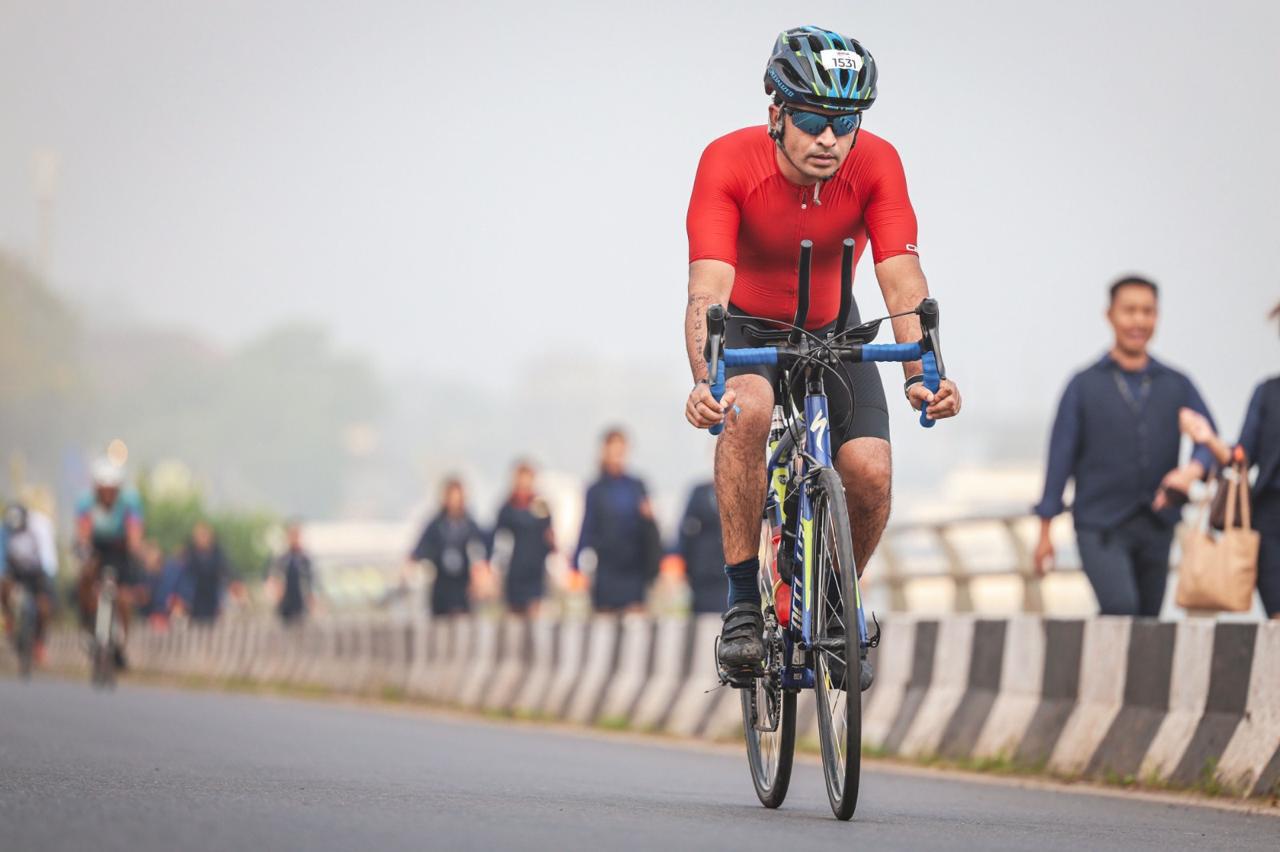
On an empty tank · Goa December heat · Making peace with what the day allows
The run is where the plan ended and something else took over.
Five minutes into the run, the stomach cramps arrived. I slowed to a walk. Tried running again when it eased. Same thing happened. I did this a few times before I stopped trying to fight it.
I made a decision somewhere in those first few kilometres: I am not going to chase anything today. I am going to finish. That is enough.
So that's what I did. Walk when I had to, run when I could, keep moving. The entire run was a negotiation between my body and the finish line. My body kept saying slow down. I kept saying not yet, just a bit more.
When I crossed the line, I was exhausted in a way I hadn't expected. Not just physically, but from everything. The illness, the uncertainty of Saturday, the decision to show up anyway, the entire race. It all arrived at once at the finish.
What I felt wasn't triumph. It was something quieter. Gratitude that I'd even been able to attempt something like this. That I'd had people around me who made it possible. That I'd shown up on the worst possible day and the finish line had still been there waiting.
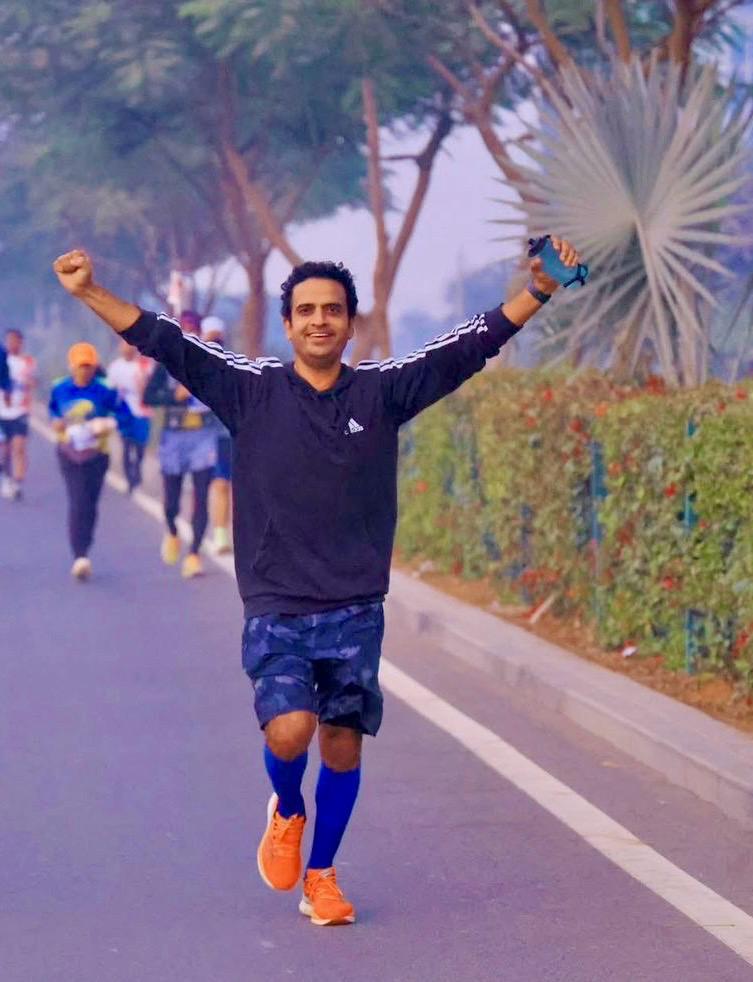
Goa taught me that community is the whole thing. And that finishing on a bad day counts more than a good race.
I got to that start line because people showed up for me before I knew I needed them to. A borrowed bike. A swim coach. A training group. None of that was mine. It was given. And then on race day, when everything went wrong, the only thing that mattered was that I'd decided to be there.
Everything on this site starts from Goa. The first-timer guide, the Instagram posts, the road to Western Australia. All of it goes back to a group of people who helped a man who couldn't swim figure out how to cross a finish line.
I slept maybe three hours the night before. I knew this was going to happen, so I had made a deal with myself in advance: accept it, and don't let it become a reason for anything. I woke up at 4am, ate my rice crackers with jam (same ritual I'd done for the three days before, which had gotten through an entire jam jar), and got ready.
The bags were already checked in from the evening before. All I had to do was pick up my helmet and swim gear and walk to the start. Simple. And yet.
You know that feeling when you have a difficult meeting coming and some part of you secretly hopes it gets cancelled? I felt exactly that for a few minutes standing there. Not panic. Just that quiet wish that the whole thing would somehow go away. I made a note of it. Then I went anyway.
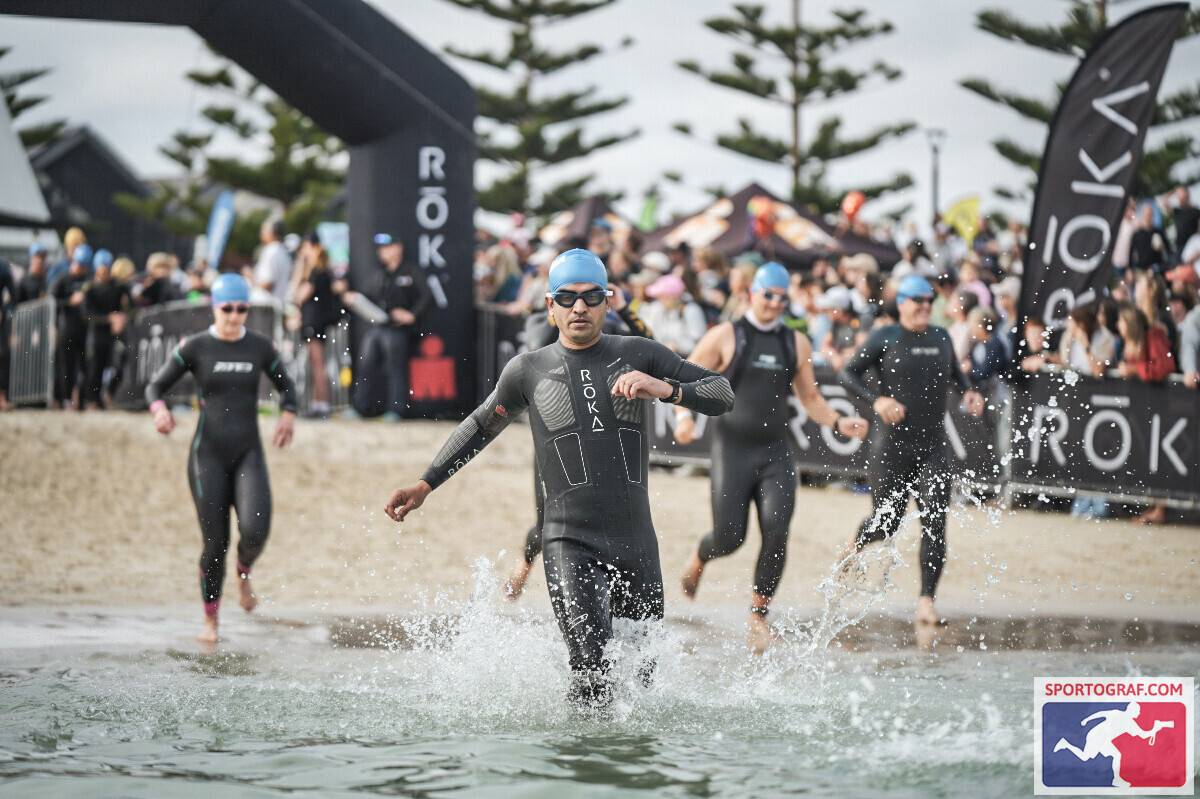
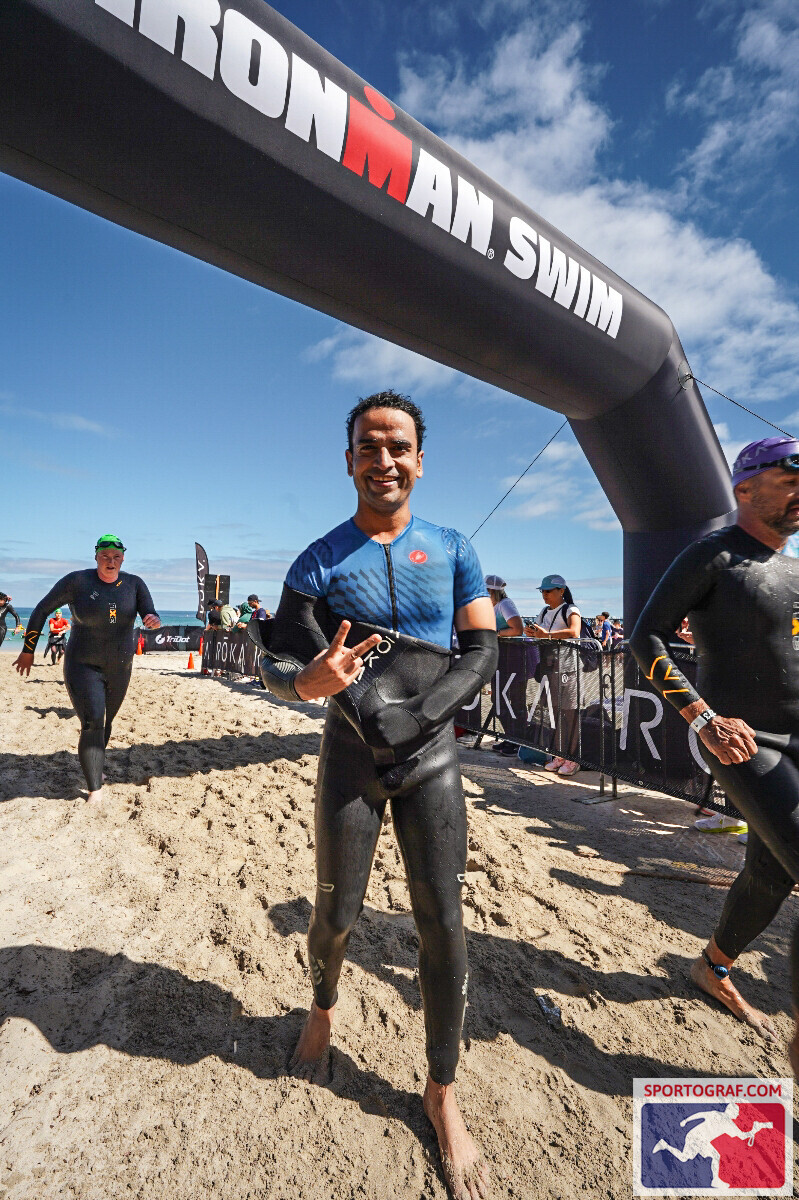
The view of the sea when you arrive is something else. Hundreds of people, all there for their own reasons, all heading toward the same thing. It's hard not to feel something in that moment. I did.
The crowd started clapping together in rhythm, and something in the atmosphere shifted. The nervousness didn't disappear. But it got smaller. I found the zone. Then I realised I hadn't turned on my watch.
Geographe Bay · Two loops · Clear Indian Ocean water
Open water, two loops around the long Busselton jetty. The water here is clean enough that you can see the sea floor. Which you will spend time looking at, because the swim is long enough that you need things to look at.
Because I hadn't started my watch in time, I had no distance feedback the whole swim. Which turned out to be fine. I just focused on the next buoy, then the one after that. Sighting every few strokes, staying on course, not getting kicked in the face.
The water was so clean I could see sea life underneath me the whole way. I kept looking down at it. There's something about swimming over an entire world that has no idea a race is happening. It puts things in perspective.
Halfway through is a beach exit where you come out of the water briefly, get your bearings, then go back in for the second loop. I used that moment to take a breath and reset. When I finally came out of the water for good, I felt genuinely fresh. The plan was to keep the swim easy, and for once, I actually stuck to the plan.
Two loops of flat coastal roads · Wind that has opinions · A long time on a saddle
180 km that look easy on paper. Flat course, good roads. What the paper doesn't mention is the crosswind, and what crosswind does to you when you're trying to hold an aero position for hours.
The first half of the bike felt good. Better than good. I actually got emotional out there. All the early mornings, all the training sessions, everything was coming together in real time. I was riding, and it was working.
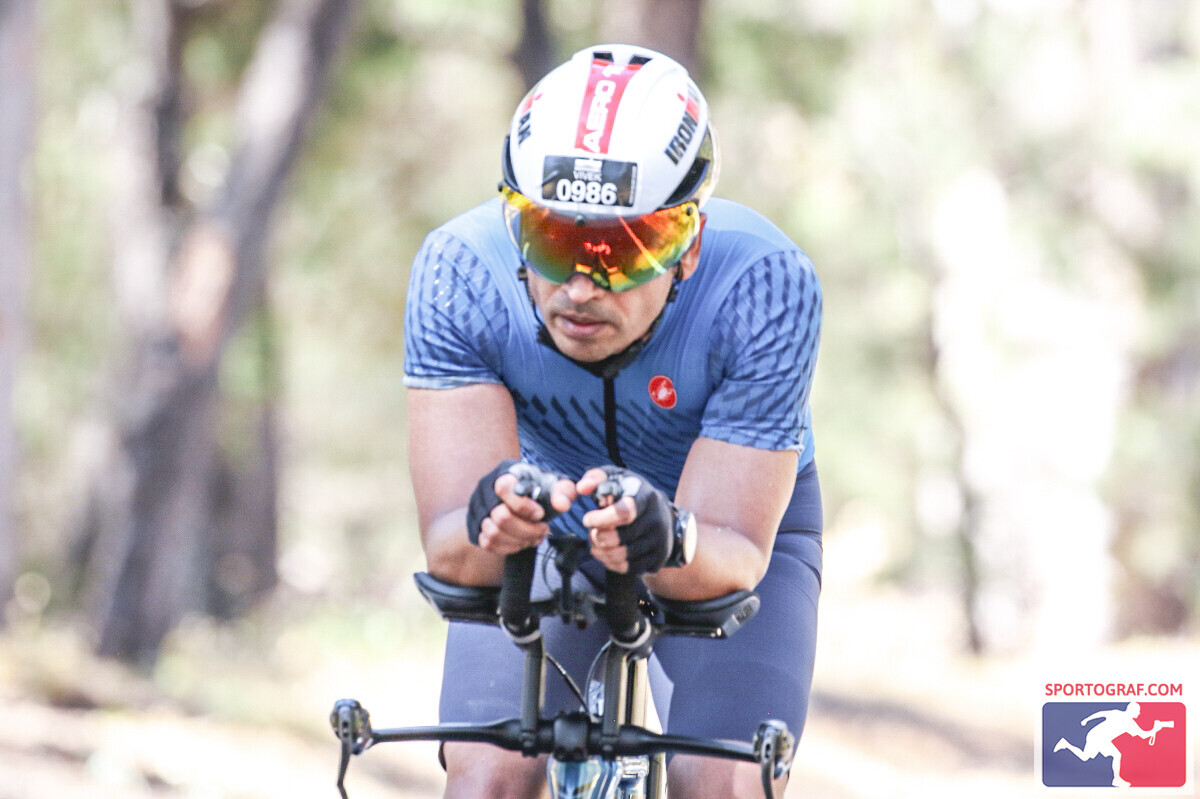
The wind made staying aero difficult. And I made a call I hadn't planned on: I couldn't eat while riding. The crosswind was strong enough that taking one hand off the bars to grab a gel felt like too much of a risk. So every half hour, I pulled up for ten or fifteen seconds, took my gel, got back on. It cost me time. I knew it was costing me time. But the alternative was falling, and falling wasn't worth it.
Finishing the first 90 km loop felt like a small win. Then the harder part started. I started counting backwards: 90 to go, then 80, then 70. It only started to feel real around 135 km when I could finally say: just 45 more.
At 135 km, I got a drafting penalty. I wasn't intentionally drafting. I was just riding next to someone at roughly the same speed and took too long to pass. I knew the rule, and I'd broken it, even if not on purpose. Here's the honest part: I was actually looking forward to the penalty box. My quads were screaming, my lower back was aching from the wind, and a few minutes sitting still felt like a gift.
I finished the bike. Not thrilled with how it went, but I'd stayed upright, stayed fuelled, and nothing had gone badly wrong. Sometimes uneventful is the win.
Four loops of the Busselton foreshore · You can see the finish line the whole time · This is both good and cruel
Running is where I'd put the most training. I felt, going into the run, like this was where I could hold things together. I was mostly right.
The first half of the run felt controlled. Strong, even. I was running, the legs were moving, the plan was working.
Then the heat came. My toes started burning. Both feet. The body was starting to argue. I slowed down, started mixing in walking, keeping the walk stretches short: never more than 50 metres at a time before running again. Not giving in. Just managing.
The nutrition plan started falling apart because the aid stations were spaced further apart than I'd trained for. The timing of gels and electrolytes went off. You adapt. You take what's available when it's available and keep going.
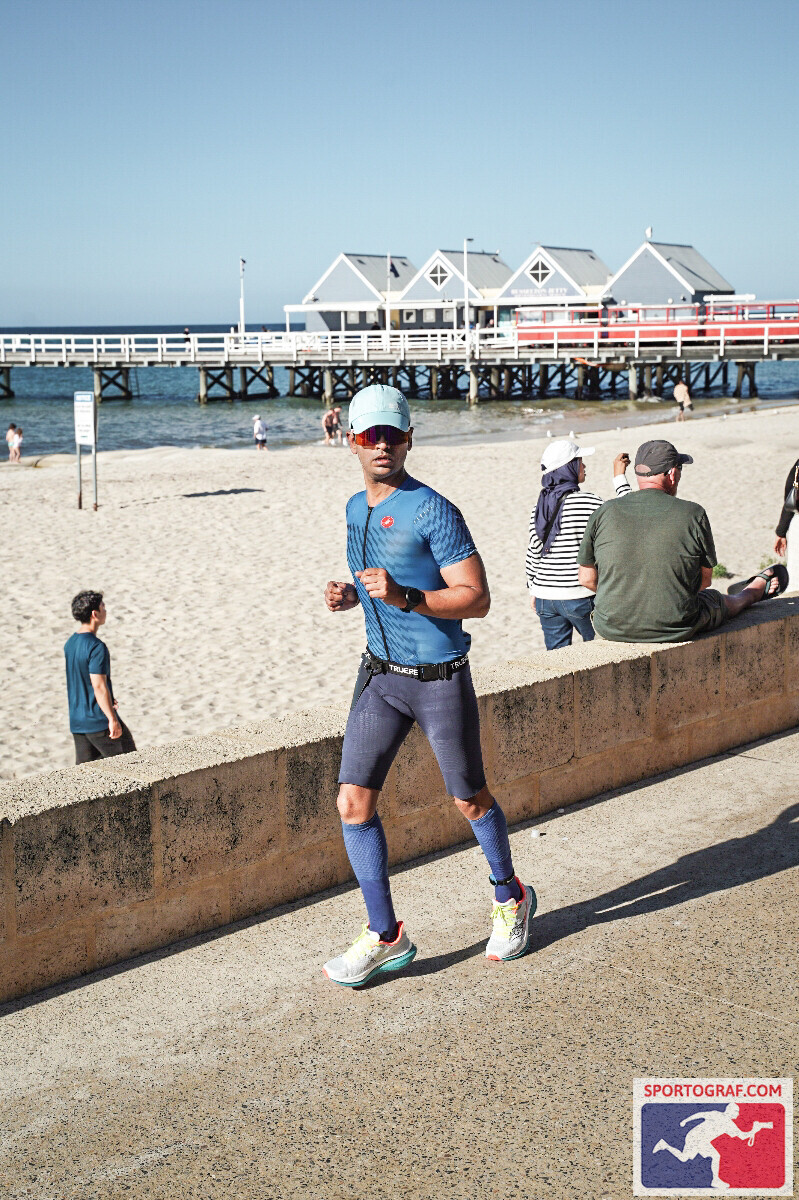
What kept pulling me through, genuinely, was my friend, who showed up at different points along the course to cheer. Not just once. Multiple times, different spots. Every time I saw him, something in me came back. That kind of support is not a small thing. It's actually one of the most important things.
The last few kilometres, the legs came back. I don't know how. They just did. And I ran through the finish line with a full heart: grateful, exhausted, and something I can only describe as overwhelmed in the best possible way.
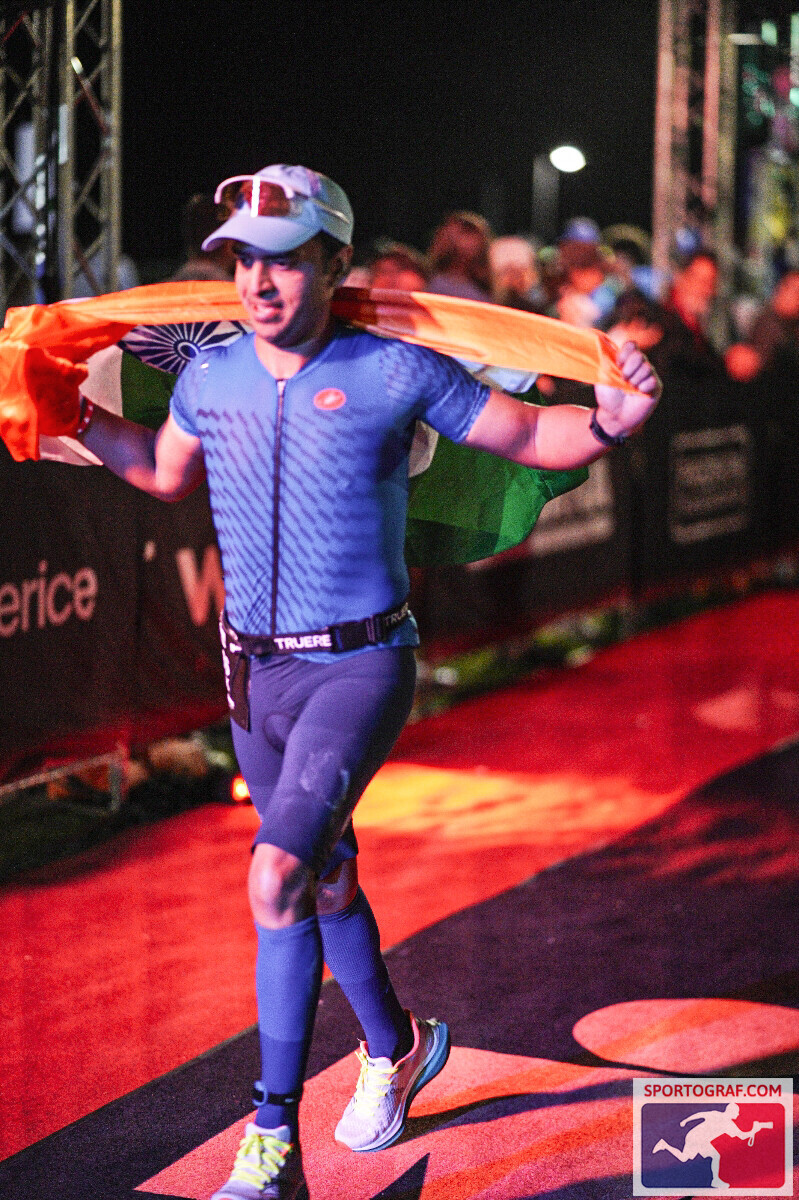
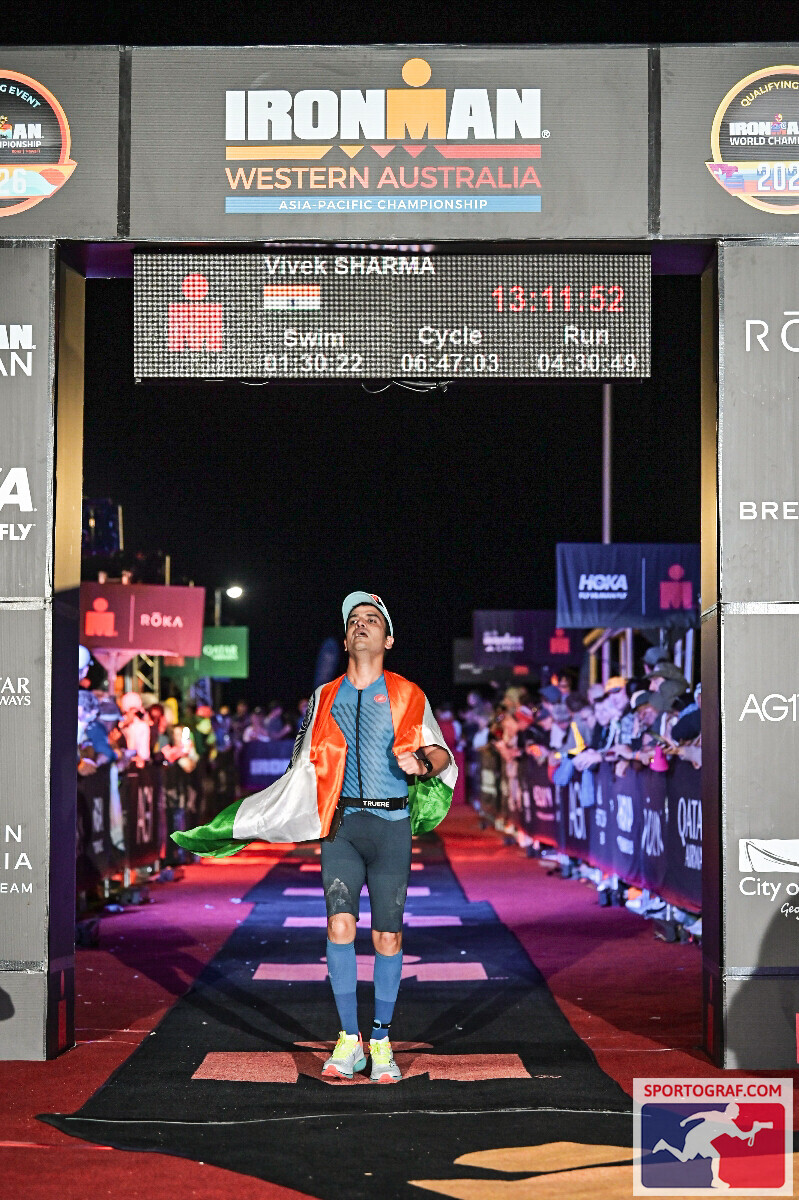
WA taught me that you can prepare for everything and still get surprised. And that's okay.
I had a plan. The plan got tested. The wind changed things on the bike. The heat changed things on the run. The nutrition timing went off. None of it stopped the day from happening. You adjust, you keep moving, and you find out that you had more in you than you thought.
Next chapter: Ultraman. 515 km over three days. I have no idea if I can. That, I've learned, is exactly the right place to start from.
I'd spent six months building for this: more than 1,500 km of running and 3,000+ km of cycling, most of it through Delhi's peak summer. 35 degrees, 90% humidity. The kind of training block that makes you question everything and then quietly makes you harder. By August I felt ready. Then I got sick.
Five days before the race, the evening after my last long run (22 km on August 15th), a fever appeared. It climbed to 101°F by the next morning. Antivirals. Rest. Uncertainty about whether any of this was going to happen at all.
My coach and I agreed: travel to Tallinn, delay the go/no-go call to the day before. By August 21st the fever was gone, but the weakness wasn't. The plan we landed on was simple and strict: start the race, but hold effort at 4–5 out of 10. Never above 6. Treat it as a lesson in restraint, not a race to push. Show up, stay controlled, finish.
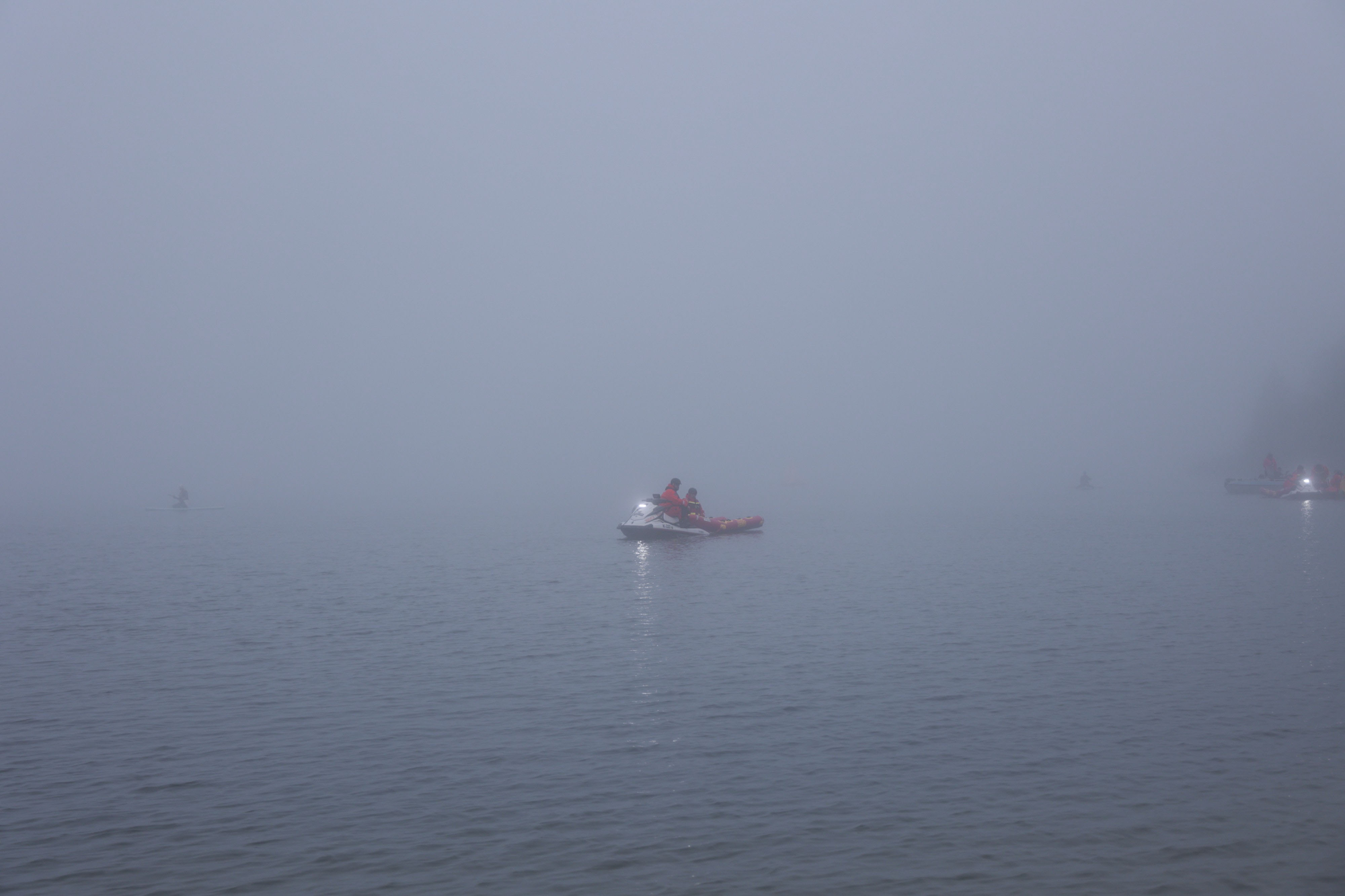
Orange and yellow weather alerts for rain and wind. The swim was delayed 30 minutes because of fog. So thick you couldn't see the first buoy from the start line. Standing there in the wetsuit, in a crowd of athletes all waiting for the same thing, something about it felt appropriately honest. This was not going to be a comfortable day.
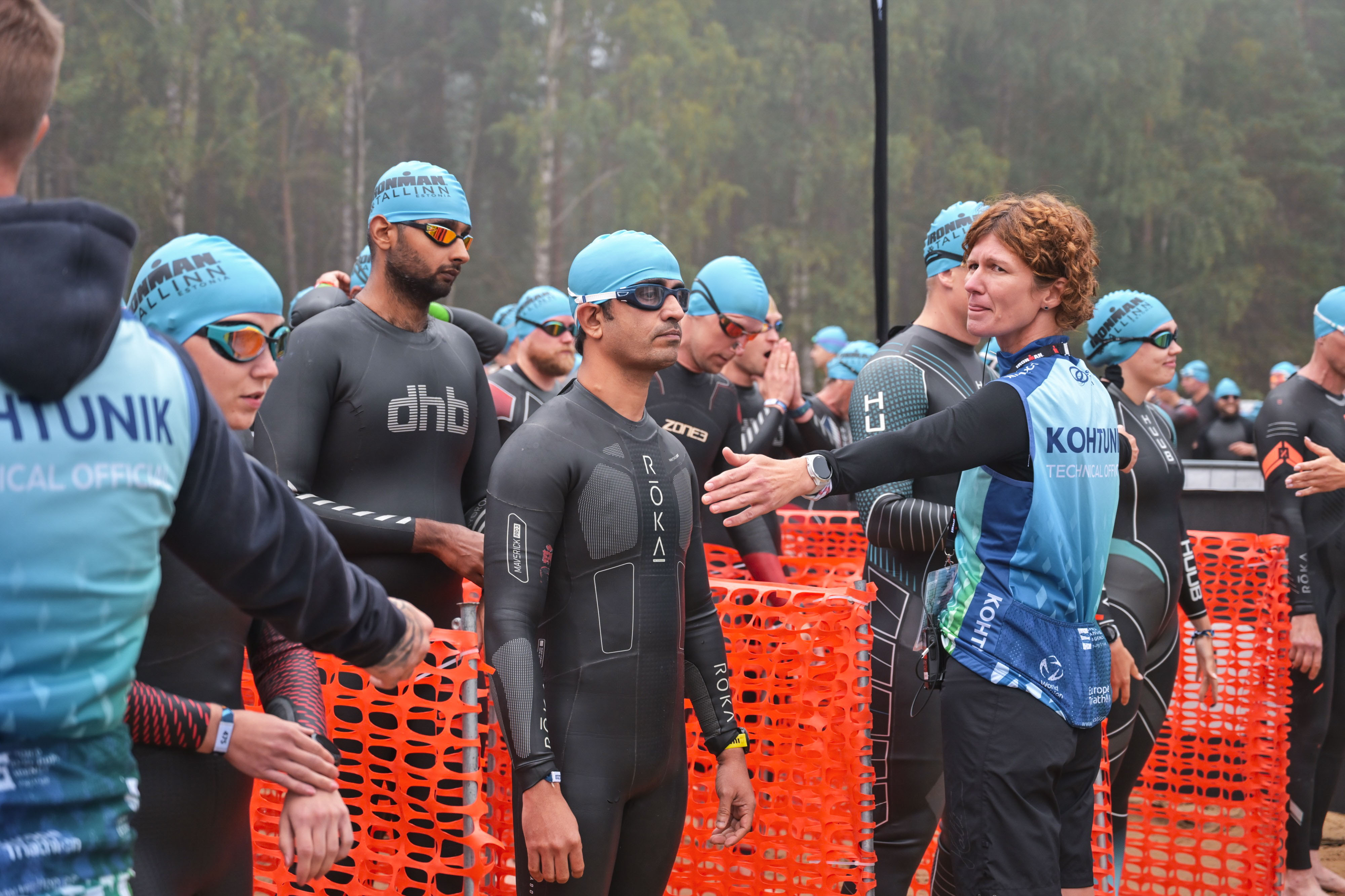
Baltic Sea · Cold water · Fog thick enough to lose sighting entirely
Expected to be the strongest leg. Turned into the most disorienting.
The cold water hit me and something shifted immediately. My breathing went wrong, the heart rate spiked, and what I can only describe as panic set in. I grabbed a kayak to hold on, slow the breath down, find myself again. The fog meant I could barely sight the buoys. At one point I stopped to tread water and fix leaking goggles. That brought on a right calf cramp. I grabbed the kayak again.
The first buoy took longer to reach than anything I'd expected. After it, the rhythm came back slowly. I found a line, I kept moving. But the swim cost me energy I hadn't planned to spend, and I came out of the water less fresh than I'd wanted.
Estonian roads · Good first loop · Rain and headwind on the second · A ditch
The bike started well. It did not stay that way.
The first loop felt controlled. Wind was supportive, I was on pace at the halfway mark. I stayed in aero for most of it. A real improvement over previous races. Nutrition and hydration were going in. Things were working.
Then the rain started. And the wind turned.
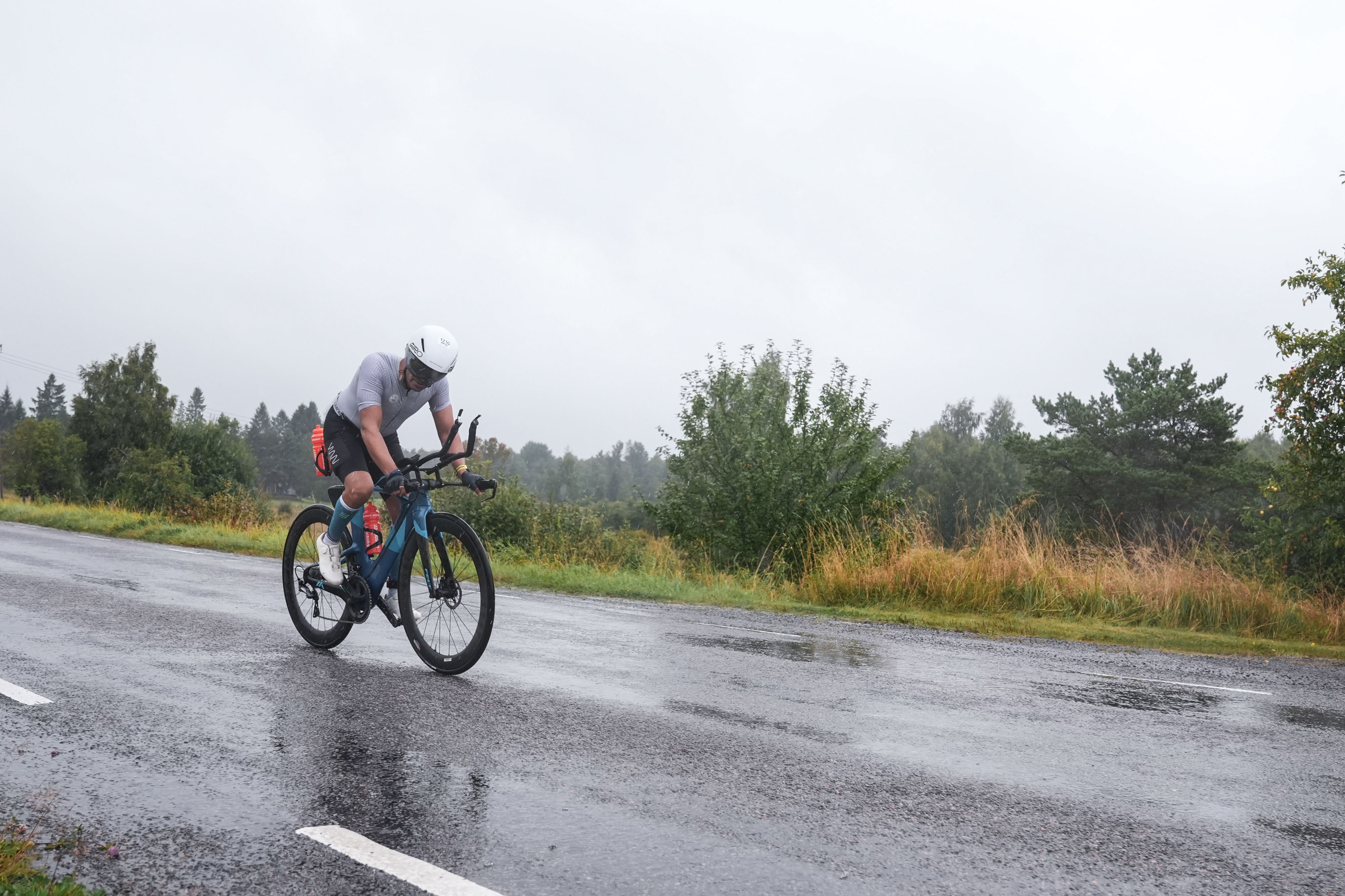
Heading into the second loop, the headwind arrived with the rain and didn't leave. Somewhere around the midpoint, I skidded into a ditch. A moment, not a disaster. No injury, back on the bike within seconds. But it stayed with me.
And somewhere in that Estonian headwind, something surfaced that I hadn't been prepared for: Why am I doing this? Including the Ultraman I'd just signed up for. The thought arrived and didn't leave. I kept riding because stopping wasn't an option. But the mental low was real, and it was deep.
Tallinn city loop · Rain never stopped · Heart rate held at 140 bpm
Legs didn't respond the way I expected. I kept going anyway.
T2, legs out, run cap on. The legs didn't come back the way training had promised. The first 10–12 km had some sub-6:00/km stretches mixed with walk breaks. Then the sustained rain and wind broke the rhythm fully.
I held around 140 bpm. The number my coach and I had agreed on before the race. Prioritise a steady finish over pace. Walk when you need to, run when you can, never stop moving completely. That became the whole strategy.
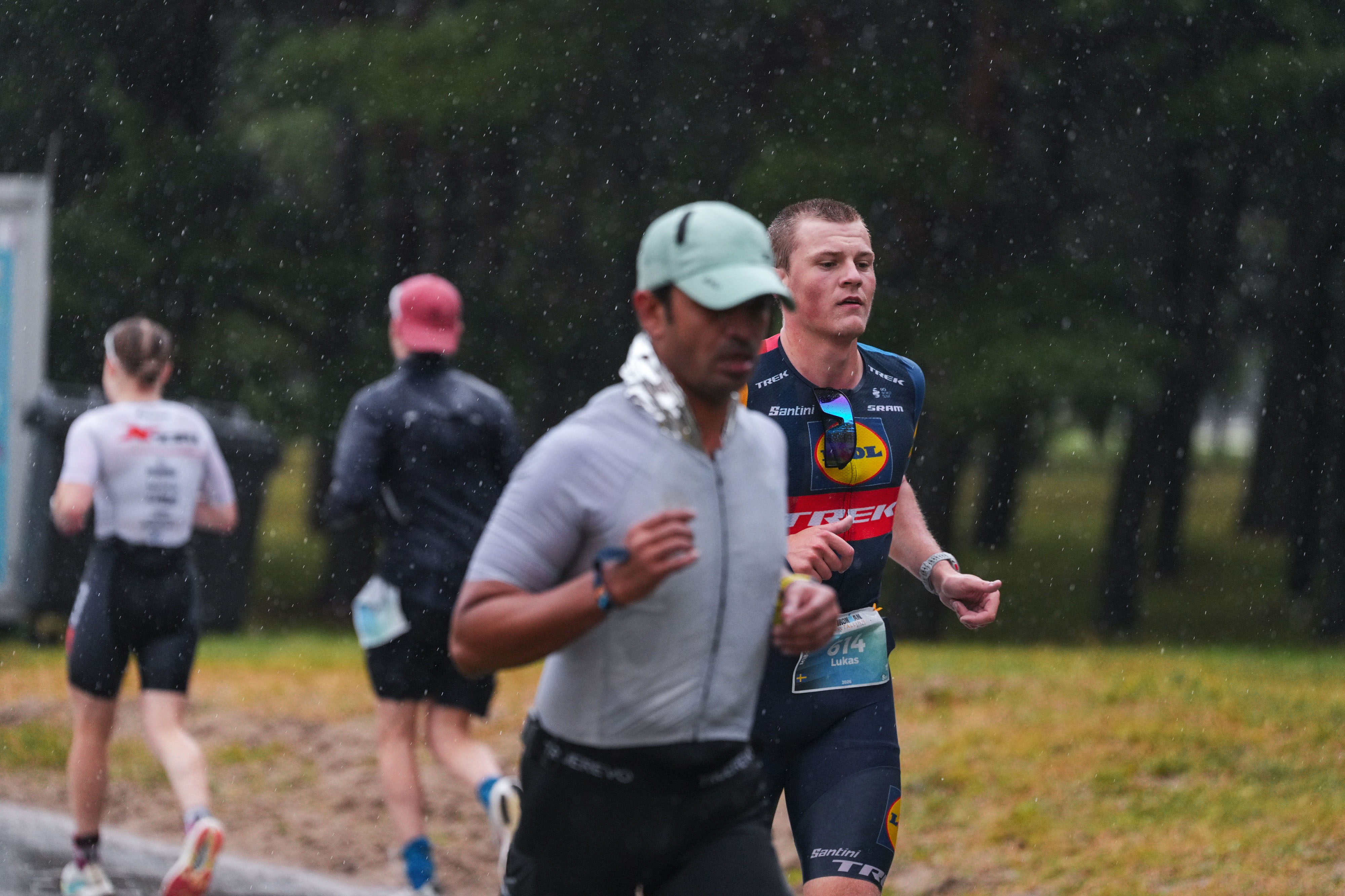
9.5 hours of the day were spent in continuous rain and wind. Across the bike and the entire run. By the time the finish line came into view, I wasn't thinking about anything except getting to it.
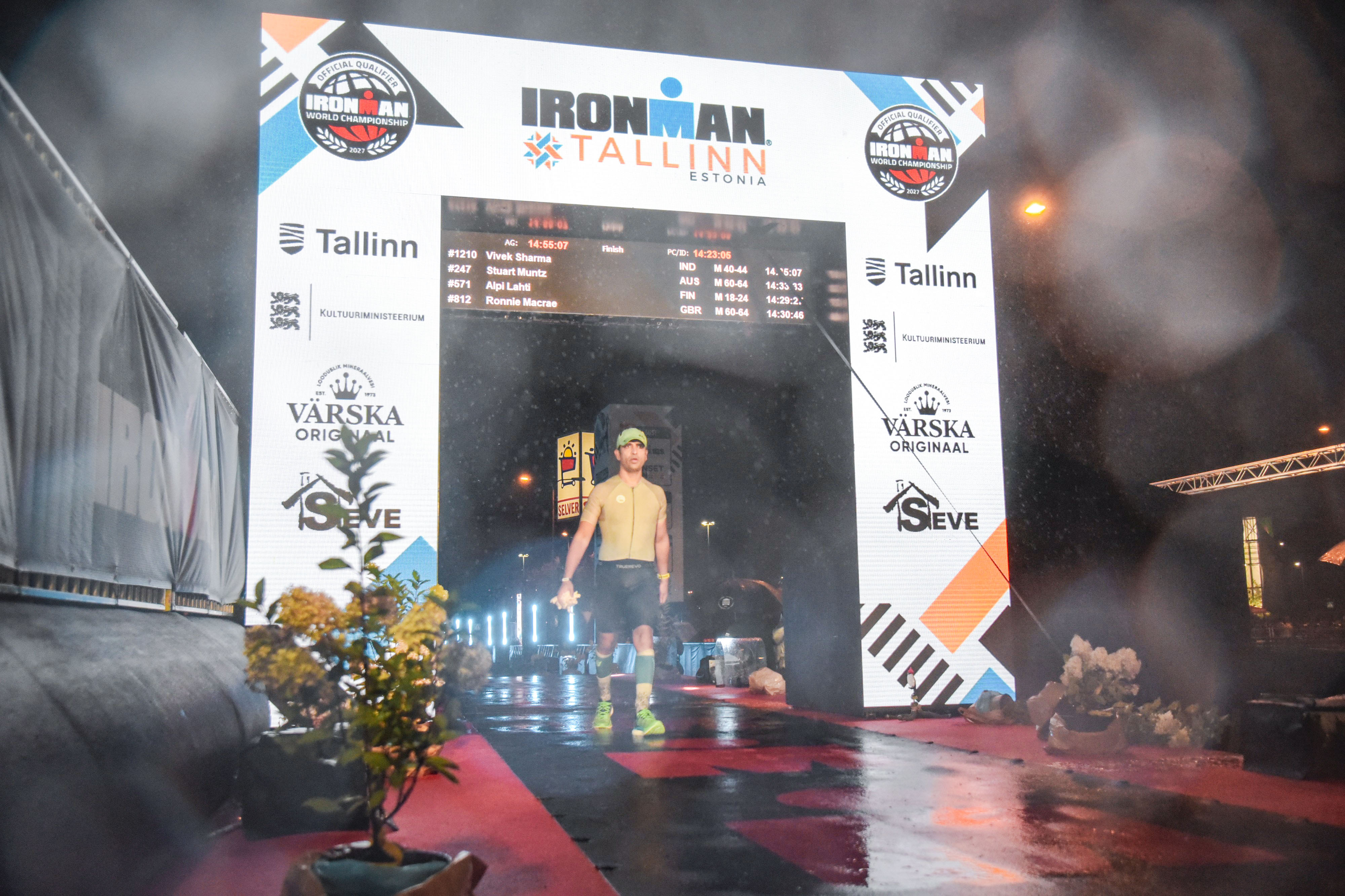
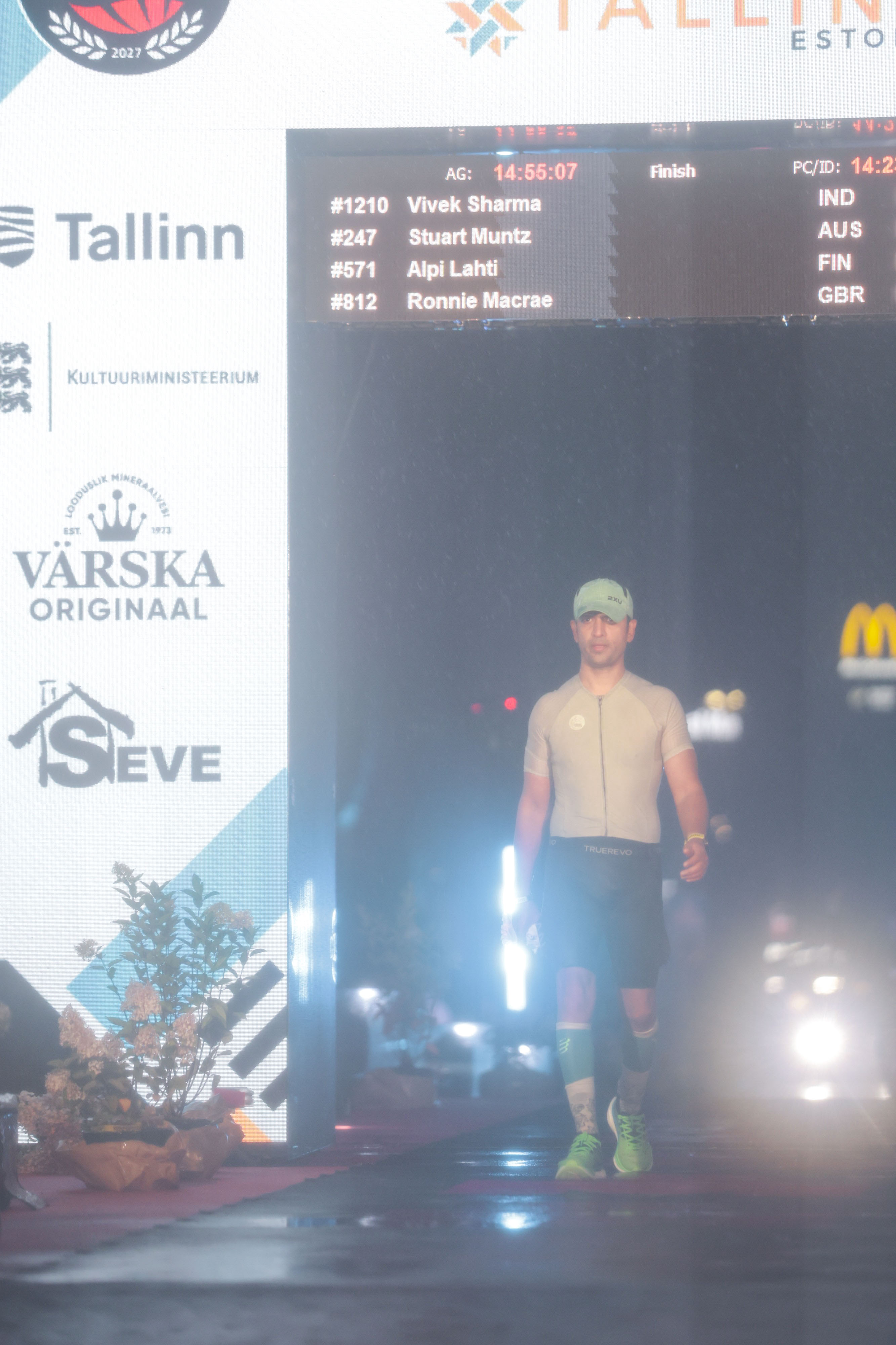
Tallinn shook me in a way the others didn't. I still don't have a tidy conclusion for it.
The self-questioning that started mid-bike was still there at the finish line. Racing five days post-illness: the swim panic, the legs that didn't respond, the mental low on the bike. All of it stacked. Explanation doesn't make it feel smaller.
What I know is this: I kept going when I wanted to stop. Every part of the day, the panic, the ditch, the rain, the doubt, and I crossed the line anyway. That counts for something, even if I'm still working out what.
The question the race asked me, why are you doing this?, didn't have a good answer in the moment. That's probably why I'll keep going. The answer is somewhere ahead.